
The Lviv Opera House is not merely a building. It is a living organism, an embodiment of dreams and pain, a winged phoenix born from the flames of wars and reborn from the ashes of history. Its façade, as if chiseled from the snow of the Carpathian Mountains (a range stretching across Western Ukraine), glimmers with the gold of Lviv’s pride, while its towers, like treble clefs, trace a musical score across the sky. Every corner whispers: “I am Lviv. I am eternity.”
History: From Empires to Independence
The Austro-Hungarian Score (1897–1918)
The theater was born in 1900, when Lviv was known as Leopolis—a jewel of the Austro-Hungarian Empire. Designed as a symbol of imperial might, it instead became the soul of the city. Architect Zygmunt Gorgolewski, a visionary from Wrocław (now Poland), poured his genius into the project. He designed over 30 palaces and theaters across Europe, from a Neo-Gothic castle in Poznań (Poland) to lavish villas in Dresden (Germany). Yet, the Lviv Opera was his swan song.
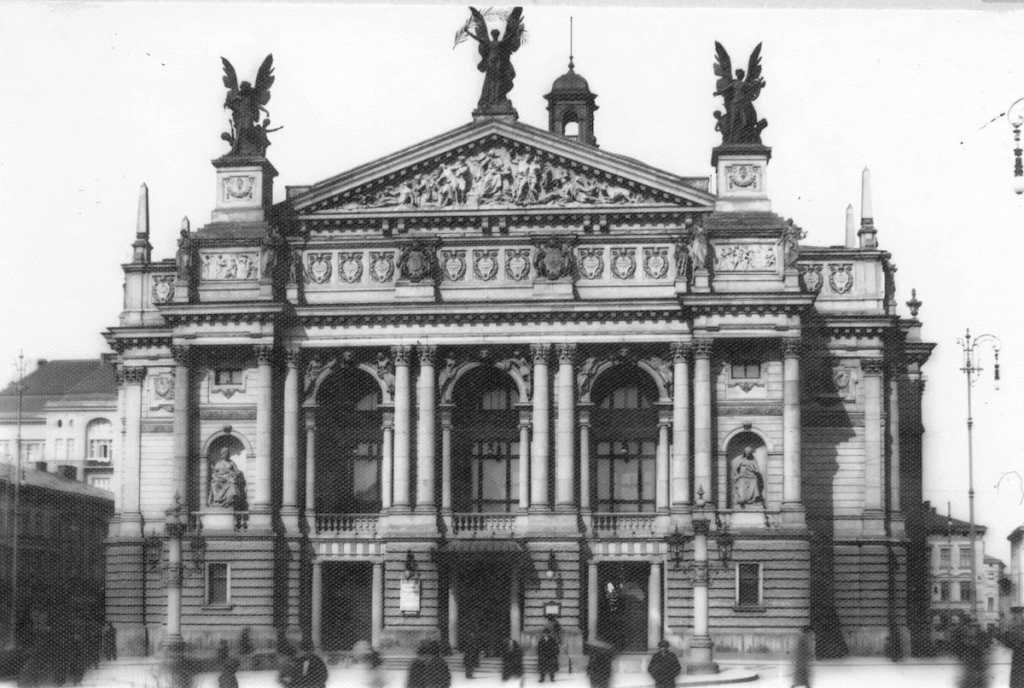
Legend claims Gorgolewski spent his final night here before his death in July 1903, declaring, “You will outlive us all.” Locals say he took his life after soil subsidence threatened the theater’s foundation in 1901—a tale unverified but still whispered today.
Wounds and Revival (1945–1991)
After World War II, the bomb-scarred theater fell silent. Soviet authorities tried to repurpose it as a “palace for the proletariat,” but in 1956, it sang again: La Traviata premiered, a flower breaking through asphalt.
Symphony of Freedom (1991–Present)
With Ukraine’s independence, the opera became a temple of national identity. It staged Lysenko’s Cossack Bayda and experimental performances. During the 2014 Revolution of Dignity, the anthem Oh, the Red Viburnum in the Meadow—a song of resistance—echoed from its stage.
Architecture: A Breathing Masterpiece
Gorgolewski’s Vision: Between Genius and Madness
The theater blends
- Neo-Renaissance arches, Baroque sculptures (muscular atlas figures and allegorical “Joy” and “Sorrow” with grapevines in their hair), and Gothic spires. The main portal, adorned with a lyre and mascaron faces, evokes a medieval castle.
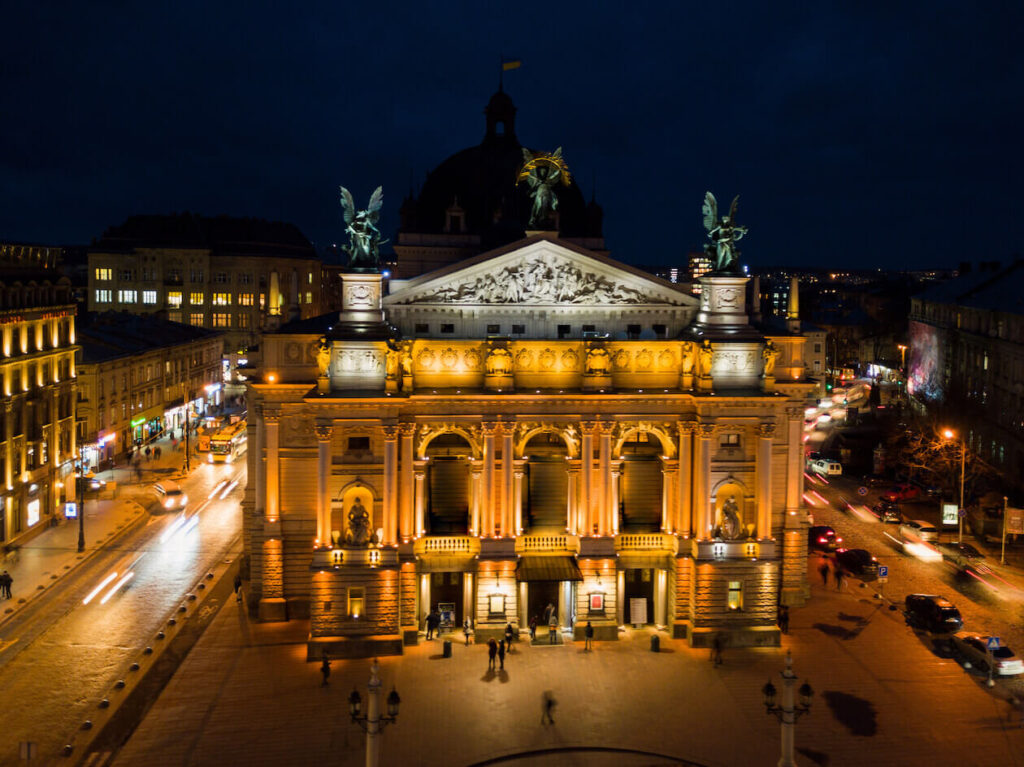
Gorgolewski built it atop the underground Poltva River, defying critics: “Lviv is a city of the impossible.”
The Poltva Legend: Locals say the river’s spirit—a green-haired maiden—sings during performances. Those who hear her find love.
Renovations: From Gold Leaf to LEDs
1930s ceilings gleam with 24-karat gold. Post-2000s updates added LED lighting that highlights stonework by night. 3D scanning restored lost plaster details, while floor projectors turn 19th-century wall poems into holograms.
Interior: Enchanted Details
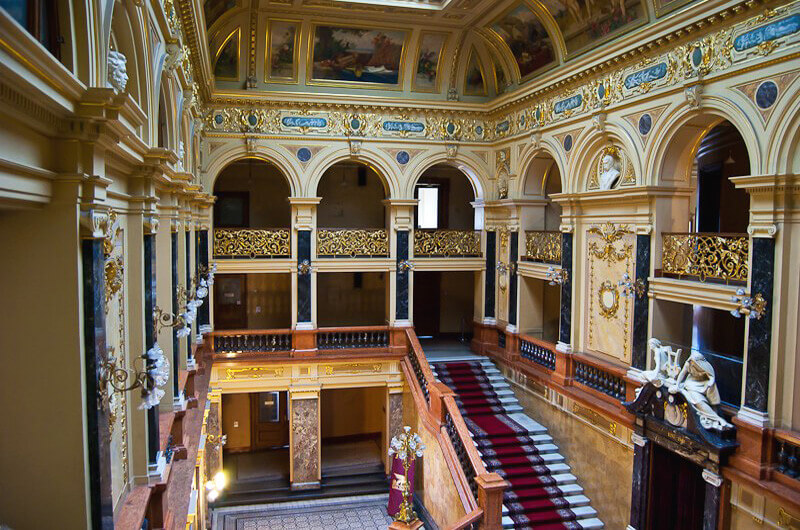
Vestibule: A Gateway to Wonder
Marble nymphs—modeled after 19th-century Lviv women, including (rumor says) Gorgolewski’s wife, allegedly “stolen” from a convent—greet visitors.
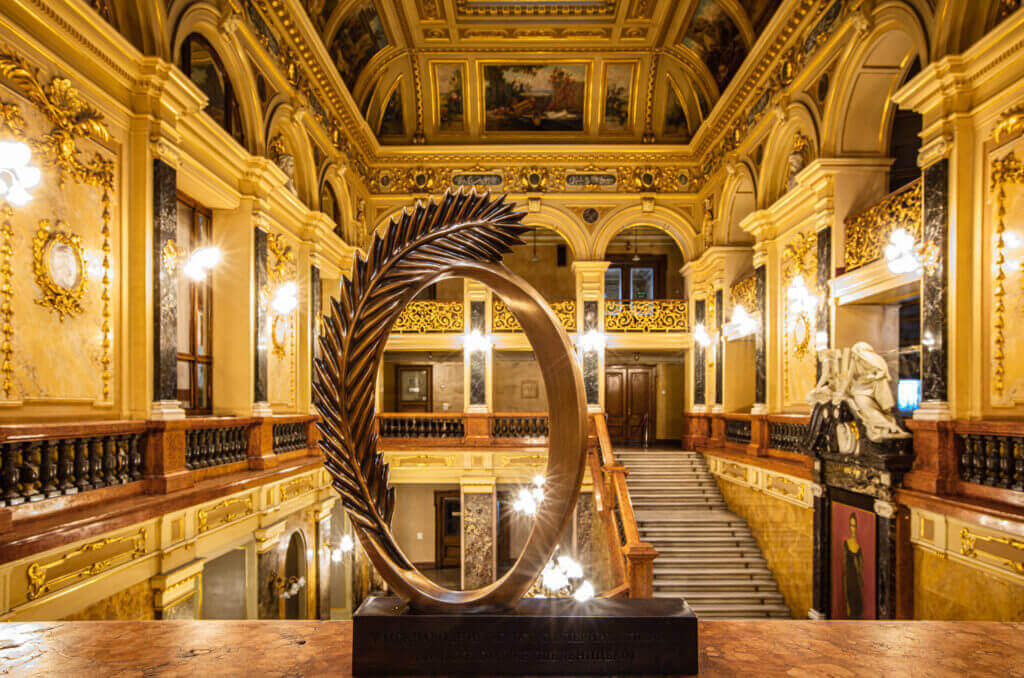
Foyer: A Golden Cocoon
Mirrors and crystal chandeliers illuminate frescoes of Apollo and the Muses.
Auditorium: The Heartbeat
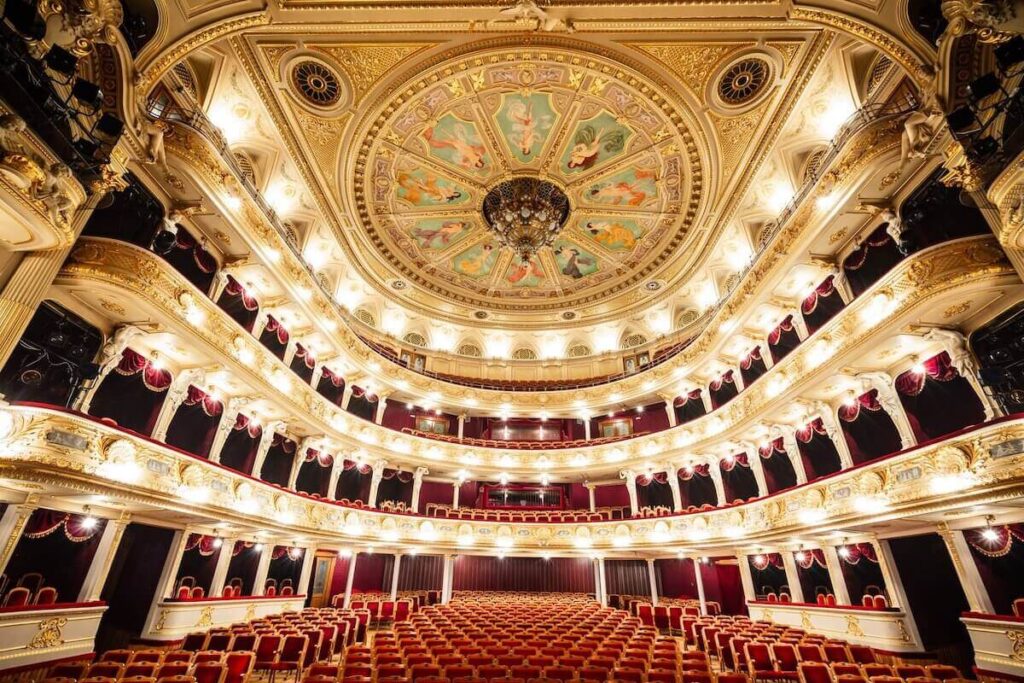
1,100 crimson velvet seats sit beneath a dome painted with The Judgment of Paris (a Greek myth where a prince judges goddesses’ beauty—Lviv, naturally, wins). The dome’s acoustics evenly distribute sound, while hydraulic platforms swap sets in 45 seconds.
Stage Stars: From Caruso to Domingo
Solomiya Krushelnytska (the “Ukrainian nightingale”), Enrico Caruso, and Plácido Domingo graced this stage. After performing here, Domingo called it “the only opera house where I felt in God’s home.”
Why Visit?
- Eneida: A mix of humor and patriotism, featuring a devil in red pants and Aeneas with an iPhone.
- Digital Innovation: Holograms of poet Lesya Ukrainka in Forest Song (2023); AI-generated sets at the annual OPERA.AI festival.
- Night performances by candlelight, with champagne shared alongside actors.
“The Lviv Opera is where time stops to listen to eternity sing.” — Svyatoslav Vakarchuk, Ukrainian musician.
How to Get There
From Lviv Railway Station:
- Walk 200m to Liberty Avenue, turn left onto Horodotska Street, pass St. Olga and Elizabeth Church (a Gothic Revival landmark), and stroll for 15 minutes. Miss the circus? You’re lost.
- Tram №1 also stops here.
Tickets:
From ₴100 (balcony) to ₴1,500 (orchestra). Check the official site for Night at the Opera—candlelit shows with post-performance champagne.
A City That Never Sleeps
The opera hosts avant-garde fusions: Vienna’s orchestra plays electric violins at the Mozart Modern festival, while a La Scala collab merges Ukrainian folk art with Italian Bel Canto. During Nuit Blanche, its façade becomes a canvas for light art—portraits of Krushelnytska and Gorgolewski “speak” through patterns.
At night, the building glows. Is it Gorgolewski’s spirit? The Poltva’s lullaby? Listen closely: “Lviv is an opera that never ends.”
P.S. Look up when leaving: A stone griffon guards the roof. Since 2022, it’s joined by a lion clutching a sunflower—Ukraine’s symbol of resilience. Two secrets now watch over Lviv.
Did you like the article? Then we recommend that you read about another equally significant architectural monument, the Potocki Palace.